
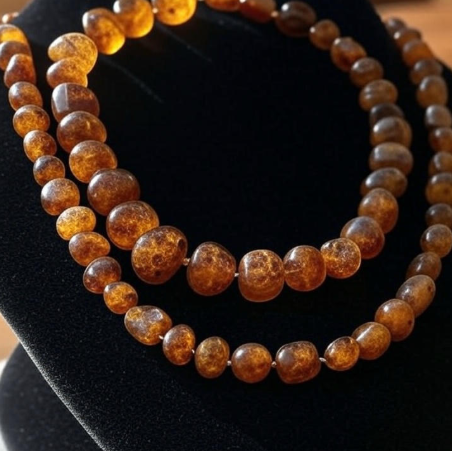
Amber: Fossilized Time, Nature's Gift
Amber, the fossilized resin of ancient trees, has captivated countless individuals with its unique warm luster, rich spectrum of colors, and the embedded imprints of prehistoric life. It's not just a beautiful gemstone; it's nature's frozen time, carrying memories of history and the wonders of life. Today, let's step into the world of amber and explore this ancient and mysterious organic gem.
The Allure of Amber: Lightness and Life
The English name "Amber" comes from the Arabic word "Anbar," originally referring to ambergris, a waxy substance found in sperm whales. The two were later confused due to their distinct fragrances. However, amber's own charm lies in its unique texture and essence.
Amber feels warm and light to the touch; it doesn't feel cold against the skin. Instead, it can release a faint pine fragrance when warmed by body temperature. It's considered a "living" gem because it records life from hundreds of millions of years ago. Amber often encapsulates ancient insects, plant debris, or even small animals, all fossilized in time. Each piece is a unique work of art and a crucial source of information for scientists studying ancient organisms.
Amber's colors are incredibly diverse, ranging from transparent light yellow to deep reddish-brown "blood amber," to the uniquely patterned "honey amber" and "chicken-fat yellow beeswax amber," as well as rare "blue amber" and "green amber." Each color and texture tells a different story, showcasing nature's masterful artistry.
Amber's Classification and Value
Amber comes in many varieties, and its value primarily depends on the following factors:
-
Transparency:
- Amber: Transparent or semi-transparent amber. This can be further categorized by color, such as golden amber, blood amber, and tea amber.
- Copal/Amber (Beeswax Amber): Opaque amber, named for its color and texture resembling honey and beeswax. Beeswax amber typically has a higher value than transparent amber, with "chicken-fat yellow" being the most prized.
- Inclusions (Insect Amber, Plant Amber): Amber containing complete or clear biological remains like insects or plants has extremely high scientific and collectible value, commanding significant prices. The rarer, more complete, and clearer the inclusion, the higher its value.
- Color: Amber with rarer, purer, and more uniform colors commands a higher value. For example, rare colors like blue, green, and red (blood amber) are generally more valuable.
- Size and Shape: Larger pieces of amber are rarer and thus more valuable. Regular and full shapes are also more sought after.
- Origin: Amber from different origins has distinct characteristics. Major amber sources include the Baltic Sea region (Baltic amber), the Dominican Republic (Dominican blue amber), and Mexico (Mexican blue amber).
How to Choose and Care for Amber?
When selecting amber, pay attention to:
- Observe Inclusions: If it's insect or plant amber, carefully examine if the inclusions are complete and clear, and if they hold collection value.
- Assess Color and Texture: Choose the color and transparency you prefer. For beeswax amber, pay attention to the evenness and richness of its waxy texture.
- Authenticity: The amber market can be complex, so it's advisable to purchase from reputable dealers and request an authoritative appraisal certificate. Common identification methods include the saltwater test (natural amber floats in saturated saltwater) and friction test (natural amber releases a pine scent when rubbed).
- Avoid Treated Amber: Some amber undergoes optimization treatments (e.g., heat treatment, pressing). While these don't alter its natural properties, their value is lower than untreated amber.
Daily Care for Amber:
Amber is relatively soft and easily scratched, so it requires delicate care:
- Avoid Friction and Impact: Prevent friction or impact with hard objects to avoid surface scratches or breakage.
- Keep Away from High Temperatures and Strong Light: Amber is sensitive to heat; avoid prolonged sun exposure or proximity to heat sources, which can lead to dehydration, cracking, or color changes.
- Avoid Chemical Contact: Keep amber away from chemicals like alcohol, perfume, nail polish remover, gasoline, acids, and alkalis, which can corrode the surface or cause damage.
- Regular Cleaning: Gently wipe with warm water and a soft cotton cloth; avoid abrasive cloths or harsh cleaning agents.
- Store Separately: Store amber jewelry separately in a soft pouch or box to prevent rubbing against other jewelry.
- Frequent Wearing: Regular wear allows amber to absorb natural oils from the skin, enhancing its luster over time.
Amber: An Ancient and Timeless Gift
Amber carries the history of Earth's billions of years of change, documenting the traces of life, and serving as a bridge between the ancient and the modern. With its unique beauty and profound essence, it has become a beloved collector's item and personal adornment for countless individuals. Whether as a personal treasure or a gift for loved ones, amber conveys a sense of nature, eternity, and good wishes.
Have you ever been captivated by the story of amber? Share your appreciation and experiences with amber in the comments below!
Silver Bracelets: An Enduring Radiance on Your Wrist
The Subtle Charm of Stud Earrings: A Classic Accessory
Related Posts

Red Bracelet Meaning, Benefits, and Spiritual Significance

The Complete Guide to Turquoise Crystal Meaning, Healing Properties, and Spiritual Benefits

How to Meditate with Crystals for Healing, Chakra Balance, and Positive Energy

Anklets for Women: Meaning, Style, Symbolism, and How to Wear Crystal Anklets

How to Apply a Bagua Map for Better Energy, Balance, and Harmony in Your Home

1212 Angel Number Meaning: Powerful Spiritual Signs From the Universe

Jade Bracelet Meaning, Symbolism, and Benefits: The Complete Guide to Prosperity and Positive Energy
