
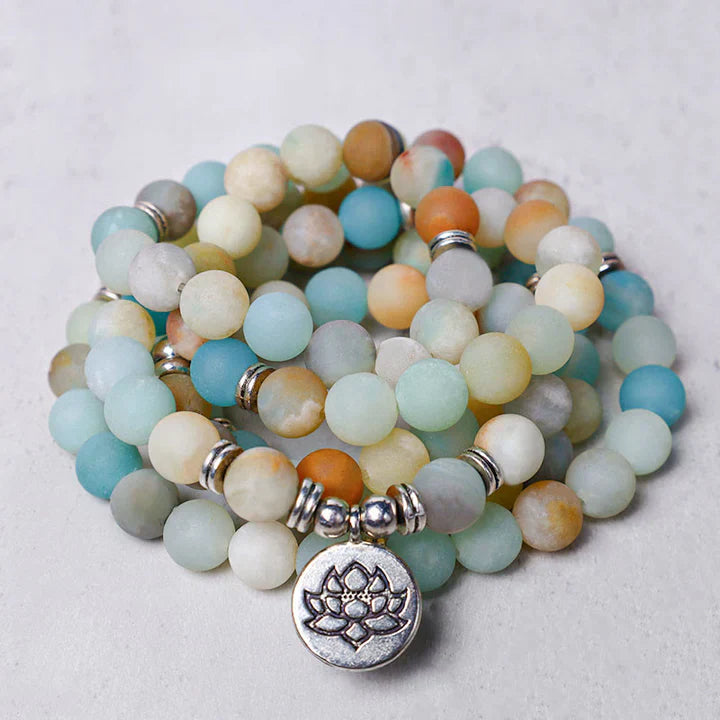
how to make a rosary bracelet?
Making a rosary bracelet requires taking into account both practicality and aesthetics. The process should proceed step by step from material preparation, size planning to bead threading and fixing. At the same time, attention should be paid to the characteristics of different materials and the details of processing. The following is a detailed production process and precautions:
I. Preparatory Work for Making a Rosary Bracelet
1. Tool List
Basic Tools: Scissors (sharp for smoother cuts), lighter (for cleaning synthetic cord ends to prevent unraveling), tape measure (for measuring wrist size), tweezers (for threading small beads or spacers)
Auxiliary Tools: Positioning beads (for securing metal clasps), ball-point needle (for connecting pendants/accessories), beading needle (for threading small beads or elastic thread with less effort), transparent glue (such as E6000, for reinforcing knots or accessories)
2. Material Selection
Main Beads: Choose the material you need (wood/jade/crystal/agate, etc.). A diameter of 8-12mm is recommended (for beginners). The number of beads should be based on your wrist size (e.g., 18 or 21 beads. The total length, including spacers, should be 1-2cm longer than your wrist).
Wire:
Elastic wire (preferred for beginners, e.g., 0.8-1mm) Round elastic cord (double strands for greater sturdiness, suitable for everyday wear)
Cotton/nylon cord (non-elastic, requires a metal clasp; suitable for wooden/hard beads; secure with glue after knotting)
Steel wire (suitable for heavy beads such as jade/metal; requires a positioning bead and a metal clasp; strong load-bearing but non-elastic)
Accessories: Spacer beads (separating the main bead, commonly silver/agate beads, 2-3mm smaller in diameter than the main bead), Buddha head (a signature rosary accessory, one piece; the hole diameter must be adapted to the cord), pendant/hanging charm (optional, for added decorative effect), metal clasp (essential for inelastic cord, such as a lobster clasp and an extender chain for ease of wear)

II. Detailed Rosary Bracelet Production Process
Step 1: Determine Size and Design
Measure wrist circumference: Place a tape measure firmly against the narrowest part of your wrist (avoiding joints). Add 1-2cm to the measurement (allowing for movement; less for elastic cord and more for inelastic cord). 1cm)
Planning Bead Arrangement: Place the beads in the order of "spacer bead + main bead" on a table (e.g., 1 spacer bead + 1 main bead in a loop, or 2 spacer beads at each end). Confirm the total length meets your requirements. The Buddha head is usually placed at the end.
Step 2: Threading (by wire type)
▶ Elastic Threading (Easiest)
Cut the wire to a length 3-4 times your wrist circumference (thread two strands, leaving enough length for knotting). Align the ends and quickly burn the ends with a lighter (pinch them into a point for easier threading).
Stringing Order: Start at one end and thread the spacer beads, main bead, and Buddha head last in the planned order (if the hole for the Buddha head is small, use a beading needle).
Adjusting the arrangement: After threading all the beads, gently straighten the wire to adjust the spacing between the beads, ensuring they are not skewed and that the Buddha head is centered or on the inside of your wrist.
▶ Inelastic Thread (Cotton Thread / Threading Beads (Wire Rope)
Threading Beads: Thread two beading beads on one end of the wire, then thread it through one end of the metal buckle. Fold the wire back through one bead and secure it with tweezers (wire rope requires pliers to press it closed).
Threading Beads: Follow the same procedure as for elastic cord, threading the beads in the designated order, and finally through the Buddha head.
Securing the Other End: After threading, thread the wire through the two beading beads and the other end of the metal buckle. Fold the wire back through one bead and secure it. Secure the bead and trim any excess wire (leaving a 0.5cm gap for adhesive reinforcement).
Step 3: Tie a Knot and Finish
Knotting the Elastic Cord:
Cross the two ends of the wire and tie two tight knots (keep them tight to prevent loosening). Then tie a loose knot (optional for easy tension adjustment).
Rope End Treatment: Trim any excess wire (leaving a 0.5cm gap). 0.3cm), quickly burn the end of the string with a lighter (do not burn the beads). While it's still hot, gently press the end of the string (stick it to the knot to prevent it from unraveling).
Finishing with non-elastic cord:
After securing the metal clasp, check that the retaining bead is securely clamped. Apply a small amount of transparent glue to the gap between the string end and the retaining bead (avoid spilling glue onto the beads). Let dry before wearing.
Step 4: Inspection and Adjustment
Try on the bracelet: Confirm the tightness (it rotates easily, not tight) and that the beads are neatly arranged.
Reinforcement Details: If the knot is loose, re-tie it and apply glue. If the metal clasp is not smooth, apply a small amount of lubricant (such as sewing machine oil).
III. Key Considerations for Making a Rosary Bracelet
Material Compatibility:
Wooden beads (such as red sandalwood and agarwood) should avoid prolonged soaking in elastic cord (which is susceptible to moisture). It is recommended to use cotton string and a metal clasp, and wipe the surface of the beads dry before threading.
Crystal / Jade beads: Handle with care when stringing to avoid impact and cracking. When stringing with wire rope, choose beads with a hole diameter of 1mm or larger (to prevent string jamming).
Wire durability:
Replace elastic string every 3-6 months (long-term wear can cause aging and loosening), especially if frequently exposed to water (such as washing hands).
Choose cotton string with 3 or more strands (such as No. 72 jade string). Single strands are prone to breaking, so use two strands when stringing.
Tips to avoid:
Keep away from beads when tying knots (to avoid burning the beads when burning the rope ends, especially plastic/resin beads).
Number of spacer beads: For 18 main beads, 4-6 spacer beads are recommended. (Evenly distribute beads to avoid crowding.)
Buddha Head Direction: If religious requirements apply, it is recommended that the head be worn facing the inside of the wrist (close to the skin). Otherwise, feel free to choose your preferred direction.
Rosary Bracelet Care Tips:
Avoid contact with chemicals (perfumes, skincare products). Metal components are susceptible to oxidation, and wooden beads are prone to discoloration.
When not wearing for extended periods, store the bracelet in a sealed bag to prevent scratches from inter-bead friction, especially on silver jewelry.
Related Posts

Red Bracelet Meaning, Benefits, and Spiritual Significance

The Complete Guide to Turquoise Crystal Meaning, Healing Properties, and Spiritual Benefits

How to Meditate with Crystals for Healing, Chakra Balance, and Positive Energy

Anklets for Women: Meaning, Style, Symbolism, and How to Wear Crystal Anklets

How to Apply a Bagua Map for Better Energy, Balance, and Harmony in Your Home

1212 Angel Number Meaning: Powerful Spiritual Signs From the Universe

Jade Bracelet Meaning, Symbolism, and Benefits: The Complete Guide to Prosperity and Positive Energy
